
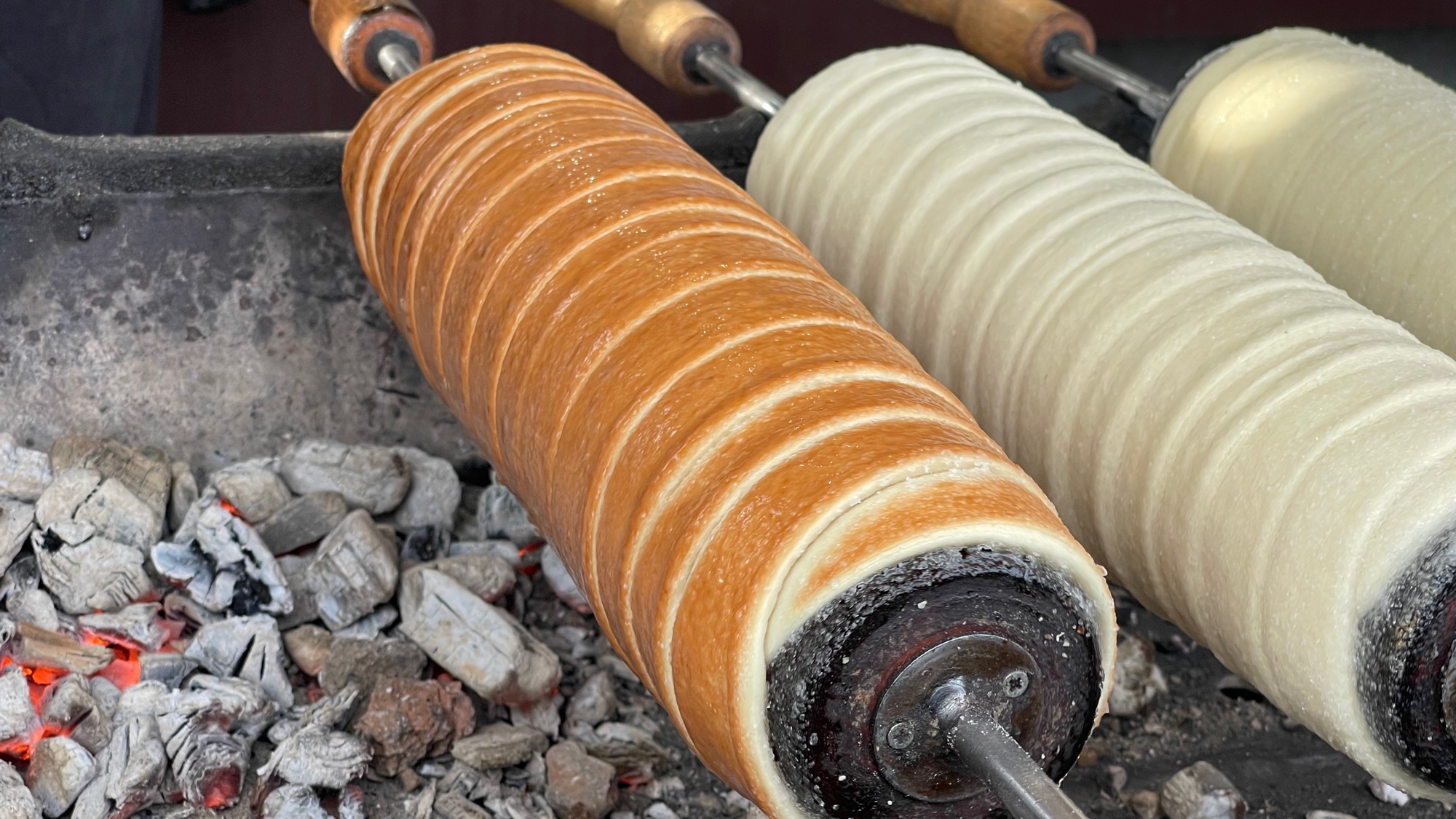
What exactly is chimney cake?
Chimney cake is a unique cylindrical pastry prepared using a special technique, baked on a rotating wooden spit over charcoal, electricity, or gas. Its name comes from the Hungarian word "kürtő" – meaning chimney or smokestack – as its shape indeed resembles a chimney. During baking, the dough is wrapped spirally around the wooden spit, then while continuously rotating, it bakes evenly as the sugar caramelizes on the surface, forming a golden, crispy crust.
The art of preparation lies in the perfect harmony between the dough's temperature, the rotation speed, and the distance from the fire. If the rotation is too fast, the chimney cake burns on the outside and remains raw inside. If too slow, it dries out. Masters spend years learning to feel the dough's "language".
Historical roots: From the 18th century to today
The first written mentions of chimney cake date back to the mid-18th century. While its exact origin is disputed, most historians agree it was a traditional festive dessert of the Szekler and Hungarian communities. In period cookbooks, it appears under the name "kürtős kalács" and was primarily prepared for weddings, christenings, and other important family events.
Transylvanian roots
Transylvania's multicultural character played a significant role in the spread of chimney cake. Szekler communities are particularly proud of this tradition, and in Szeklerland, we can still encounter authentic chimney cakes prepared in the traditional way at numerous fairs and celebrations today.
In the 19th-20th centuries, chimney cake gradually emerged from village kitchens and appeared in urban markets. Cluj-Napoca, Târgu Mureș, Miercurea Ciuc and other Transylvanian cities already knew and loved this dessert back then.
The traditional method of preparation
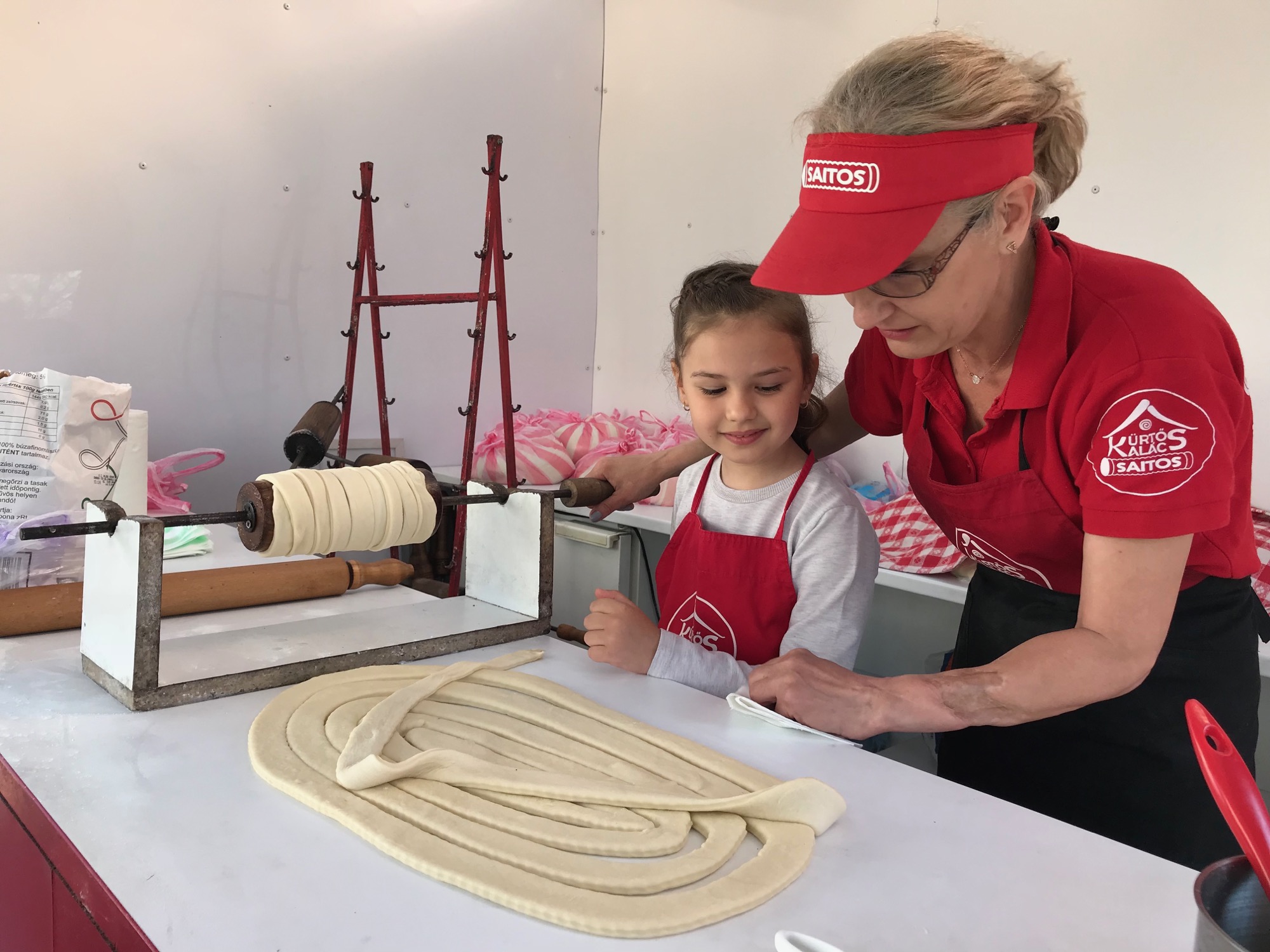
Traditional chimney cake preparation is genuine artisan work. The process takes several hours, and each step requires meticulous attention.
The dough
According to original recipes, the dough is kneaded by hand and requires a long rising time – up to 2-3 hours. The dough must be soft and elastic so it can be easily wrapped around the wooden spit without tearing.
The wooden spit
The traditional wooden spit is made from beech or other hardwoods, approximately 6-8 cm in diameter and 30-35 cm long. Modern versions also use metal, but many masters still stick to wood for the authentic taste and tradition.
The art of baking
After wrapping the dough comes the most critical part: baking. The wooden spit must be continuously rotated over embers or a gas flame so that all sides bake evenly. Meanwhile, the surface is coated with a sugar mixture that caramelizes, giving it that characteristic crispy exterior.
The baking duration is approximately 5-7 minutes, but it depends on the fire's temperature and the dough's thickness. The finished chimney cake is golden-brown, crispy on the outside, and soft and aromatic inside.
Original flavors
The classic flavors were simple:
- Cinnamon-sugar: The most classic, where cinnamon is mixed with the caramelized sugar
- Walnut: The still-warm chimney cake is rolled in finely ground walnuts
- Vanilla sugar: A more elegant, refined flavor profile
Chimney cake in the modern era
The 21st century has breathed new life into traditional chimney cake. While previously it was mainly encountered at fairs and celebrations, today it's offered by permanent stands, cafes, and specialized shops.
New flavors and innovations
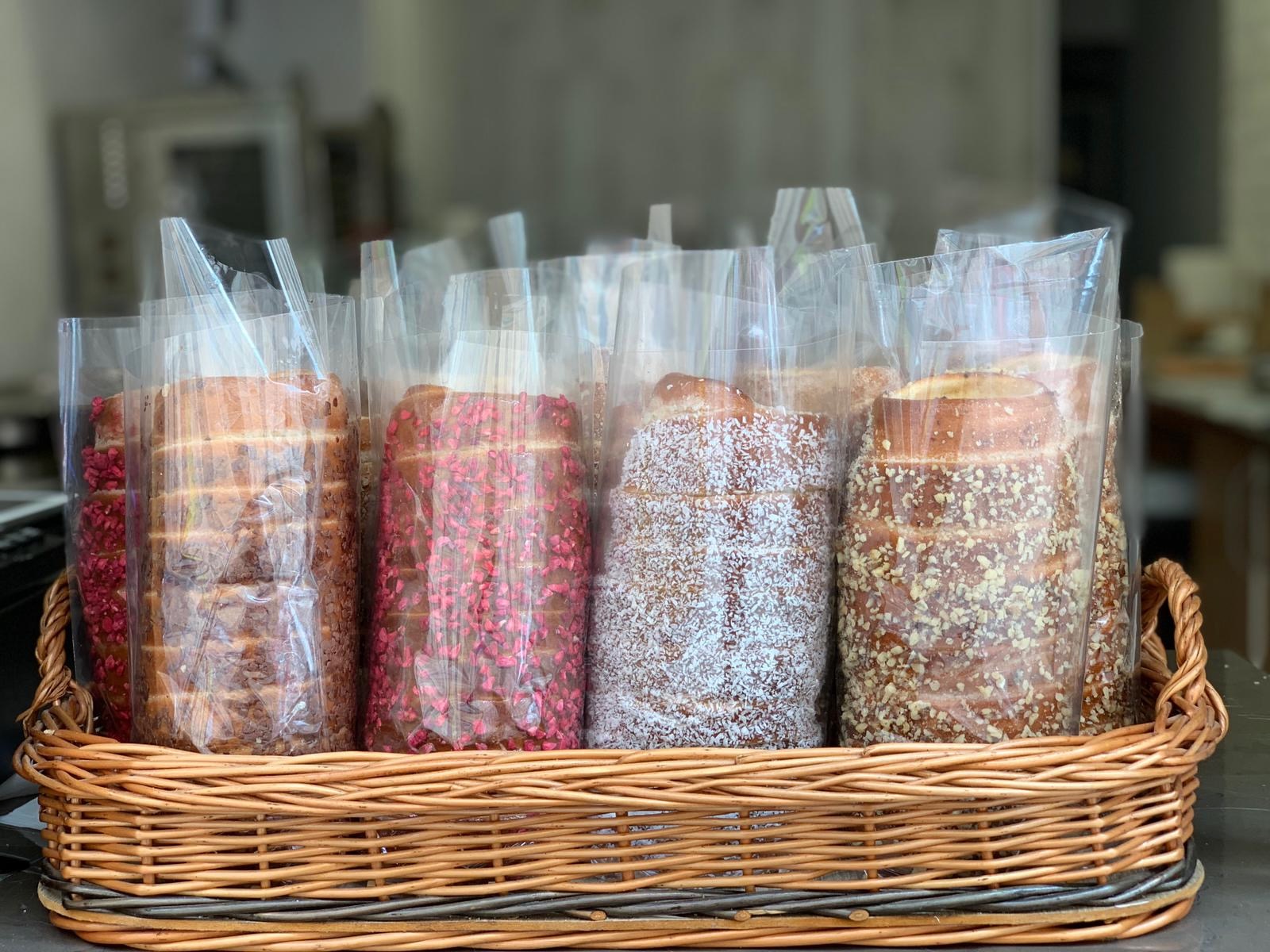
Modern chimney cake makers are creative: chocolate, coconut, raspberry, candy, and even savory variations have appeared. Some places fill the center of the chimney cake with ice cream or nutella, which, while departing from tradition, has attracted a new audience.
Family businesses and preserving authenticity
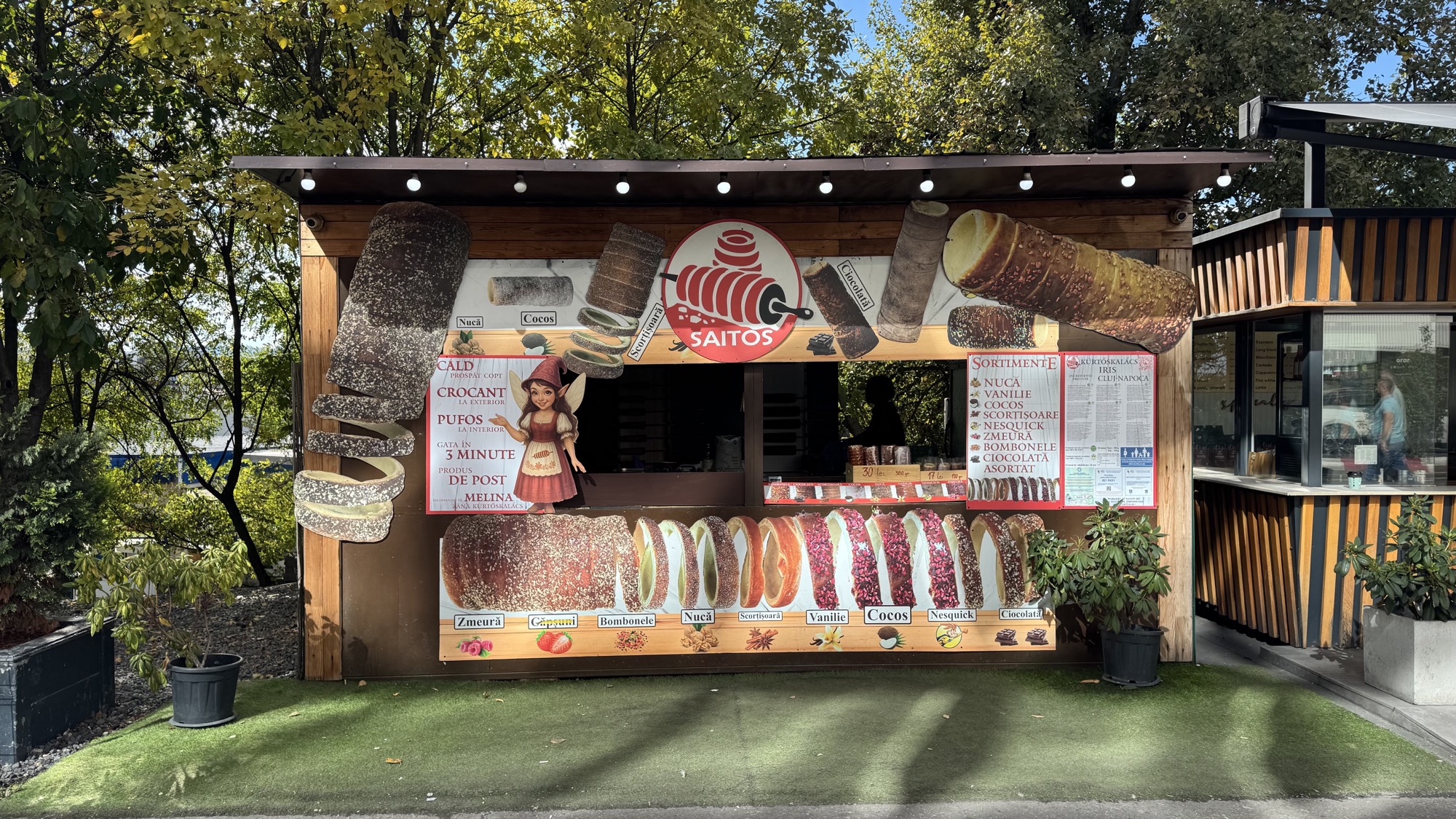
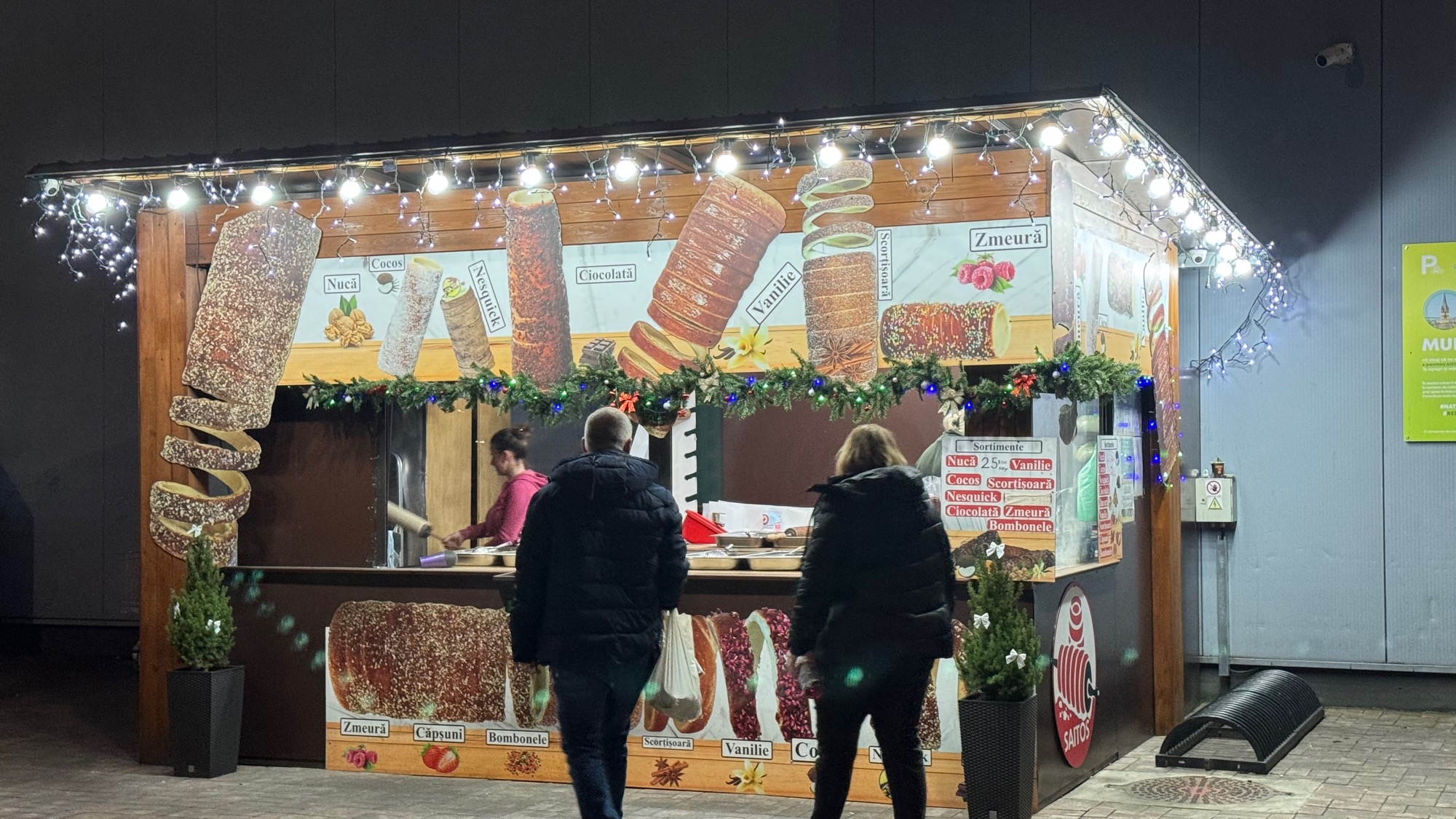
The secret of genuine chimney cake lies not only in the recipe but also in experience and attention to detail. Family businesses like Saitos Kürtőskalács, which have been preparing this dessert for 17 years throughout Transylvania, play an important role in preserving authentic recipes and traditional preparation methods.
Saitos's story began in 2009 when they prepared their first chimney cake. Since then, in several cities – Cluj-Napoca, Baia Mare, Satu Mare, Oradea, and Sibiu – they welcome visitors. The essence of their philosophy: bringing traditional products into the present, adding a bit of creativity while preserving authentic flavors and the original preparation method.
International recognition
Chimney cake has now crossed Transylvania's borders. In Prague, Vienna, Berlin, even in New York we can encounter it. Hungarian and Transylvanian diaspora communities consider it important to preserve this gastronomic heritage and gladly share it with the local population.
Where can you taste authentic chimney cake in Transylvania?
If you visit Transylvania, you can encounter original, traditionally prepared chimney cake in several places:
Cluj-Napoca
Cluj is particularly rich in chimney cake offerings. In the city center, in front of Magazinul Central or the BIG building, permanent stands await strollers. In the parking lot of Auchan Iris shopping center, there's also a place where chimney cake is freshly prepared on-site.
Saitos Kürtőskalács can be found at three locations in Cluj-Napoca, so whichever part of the city you're in, you can easily get a freshly baked, aromatic chimney cake. They're open daily between 10 AM-9 PM and offer both classic flavors (cinnamon-sugar, walnut, coconut) and modern ones (chocolate, raspberry, candy).
Szeklerland
In Szeklerland cities – Miercurea Ciuc, Sfântu Gheorghe, Odorheiu Secuiesc – it's especially worth looking for authentic chimney cake at city fairs and festivals. Here it's often still baked over charcoal, which gives it a special smoky aroma.
City festivals and fairs
Throughout Transylvania, chimney cake appears at numerous gastronomic festivals. At the Chimney Cake Festival in Sfântu Gheorghe or the Main Square Festival organized in Baia Mare, or even at Christmas markets, you can find it.
Conclusion: Chimney cake as cultural heritage
Chimney cake is more than just a simple dessert – it's a living tradition that connects the past with the present. With every bite, we not only enjoy the sweet, crispy flavors but become part of a 300-year cultural history.
Whether you visit Transylvania as a tourist or are a local resident, it's worth stopping at a chimney cake stand and tasting this special delicacy fresh and still warm. The aroma of cinnamon, the crunch of caramelized sugar, and the soft, airy interior guarantee an unforgettable experience.